How Refik Anadol and Panasonic Brought the Smithsonian Castle to Life on the National Mall
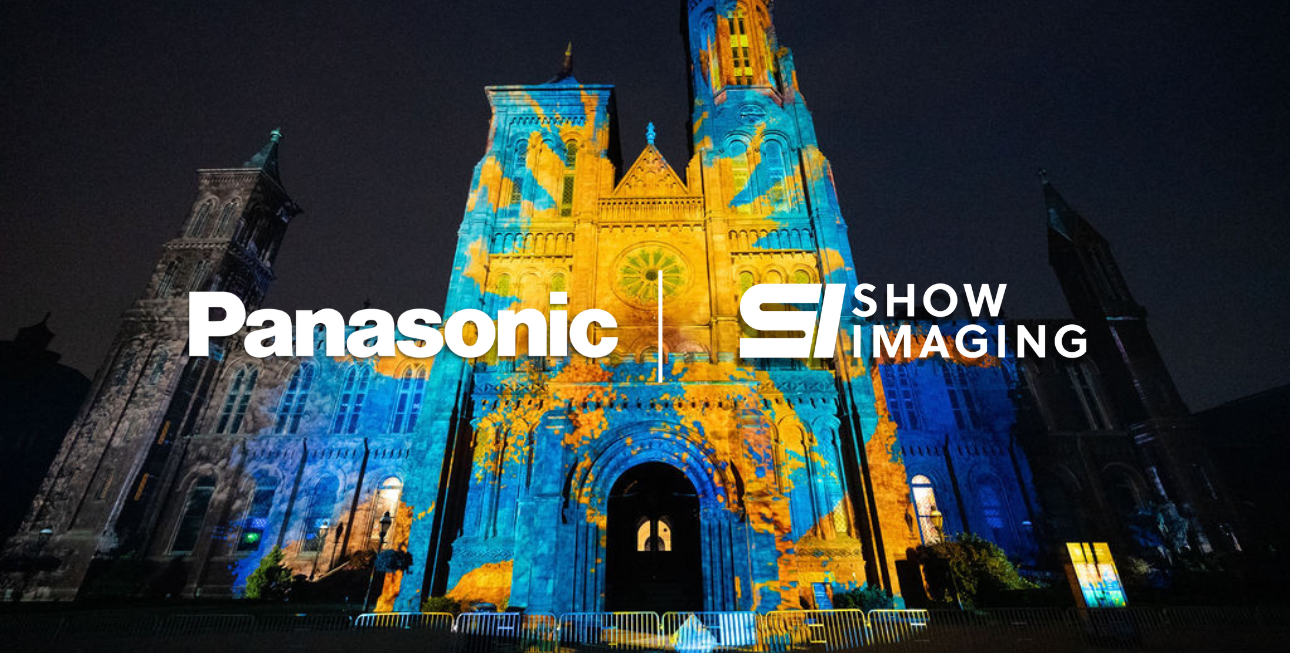
HOW REFIK ANADOL AND PANASONIC BROUGHT THE SMITHSONIAN CASTLE TO LIFE ON THE NATIONAL MALL
Show Imaging provided technical and site coordination to help transform the Smithsonian Castle into a dynamic canvas visible from the National Mall.
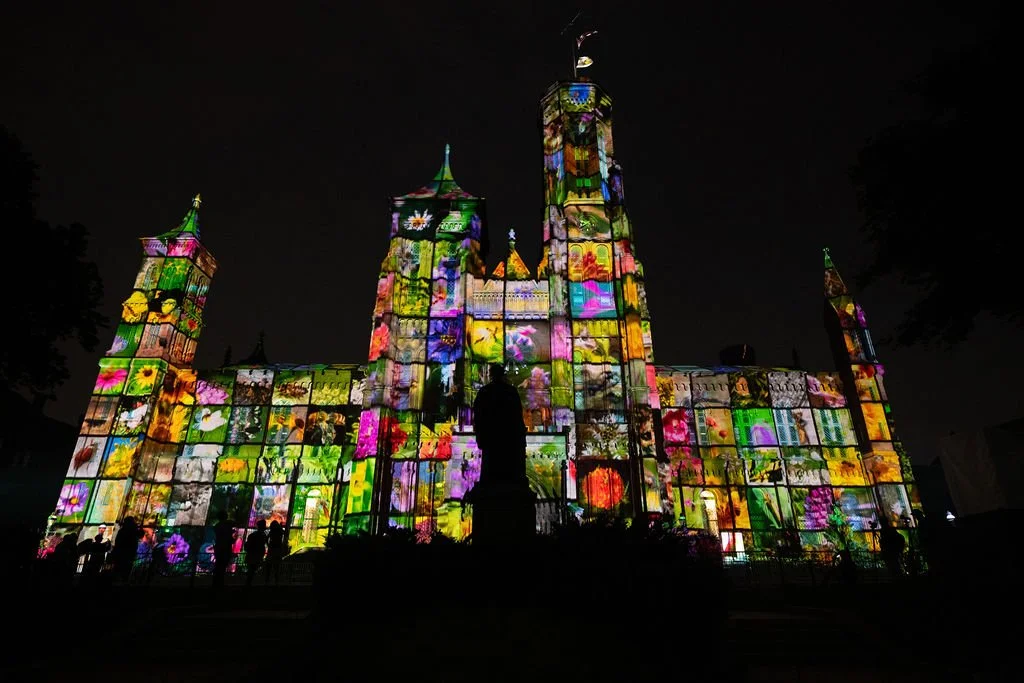
WASHINGTON, D.C. – OCTOBER 2, 2026 – As the United States commemorated its 250th anniversary, the Smithsonian Institution saw an opportunity to bring nearly two centuries of knowledge to life through an immersive public experience. Held July 17–18, 2026, on the National Mall, Smithsonian Dreams was a large-scale, multisensory public artwork by media artist Refik Anadol and Refik Anadol Studio that transformed the Smithsonian Castle with projected imagery, light, and sound. Drawing on millions of digitized items from Smithsonian collections and research, a custom AI system reimagined the Institution’s vast archives as a continuously evolving visual experience.
Bringing that vision to life required projection technology capable of performing at a monumental scale in a complex outdoor environment. At the center of the technical solution were Panasonic PT-RQ45K 3-Chip DLP™ 4K laser projectors— marking the first major U.S. event to use the new model. Show Imaging, Inc. provided technical and site coordination, helping deploy the system to transform the Castle into a dynamic canvas visible from the National Mall.
THE CHALLENGE
From the beginning, the vision for Smithsonian Dreams was ambitious. The Smithsonian wanted to create a public experience that could celebrate the nation’s past while looking toward its future, using its 157 million objects to present its collections in new and innovative ways. The project offered an opportunity to reflect not only on the United States’ 250th anniversary, but also on the next 250 years.
For Refik Anadol Studio, that meant treating the Smithsonian Castle itself as part of the artwork. "What makes this project so special is the power of public art to bring people together and create a new connection between the Smithsonian and the public space around it,” says Anadol.
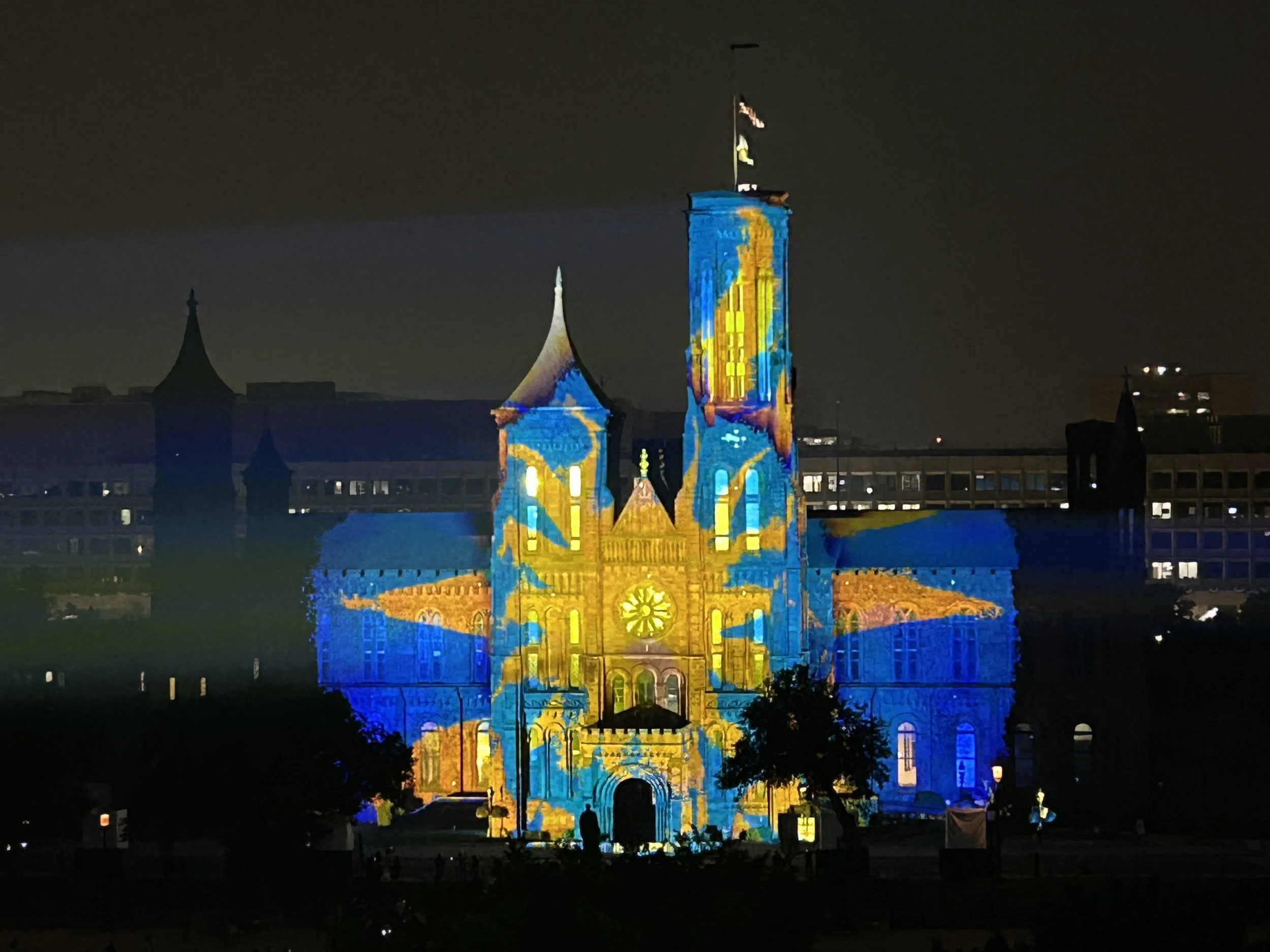
That vision meant treating the Smithsonian Castle itself as part of the artwork, with the challenge of transforming its façade into what Anadol describes as “a living architecture.” Realizing that vision introduced significant technical complexities. The Castle’s expansive architecture and multiple angles required the team to create a cohesive projection experience across its complex façade. Anadol describes the process as a “5D chess combination from multiple angles,” with the goal of allowing the building to become a living canvas for enormous visual data sets drawn from Smithsonian archives.
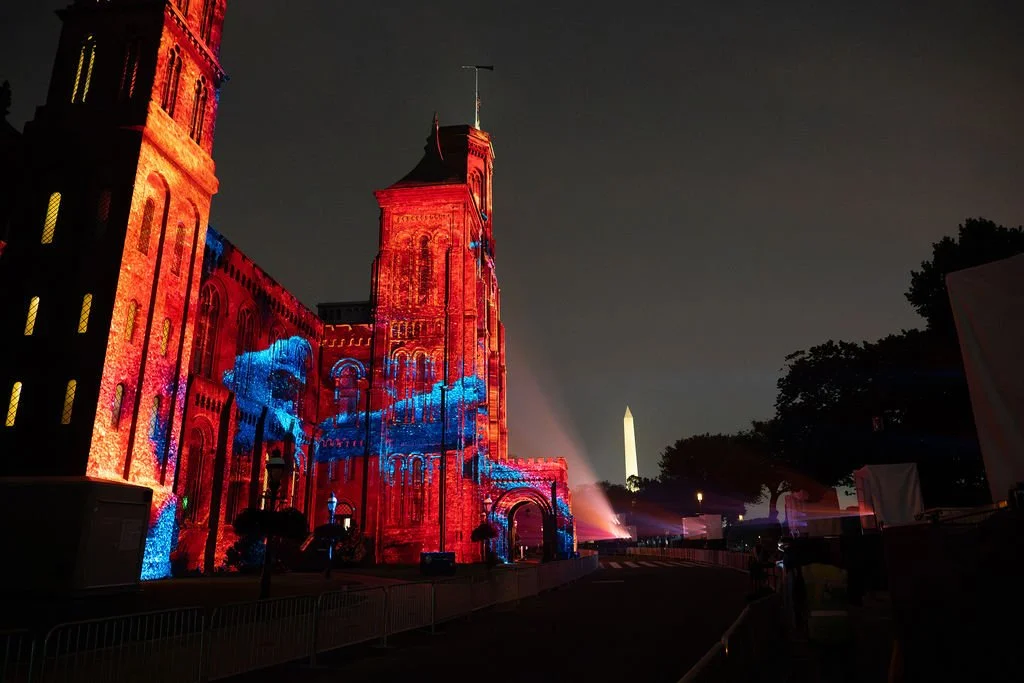
The surrounding environment presented another challenge. Projection positions had to account for the National Mall’s tree canopy, existing infrastructure, passing vehicles, and the scale of the open site. The team’s original plans called for projection towers on the Mall, but collaboration with Show Imaging opened up new approaches for positioning the technology and overcoming those physical obstacles.
Ultimately, the project needed a projection system that could deliver the brightness and performance required to preserve the artistic vision from significant distances—while working within the realities of one of Washington, D.C.’s most prominent public spaces.
THE SOLUTION
To meet those demands, the team deployed 44 Panasonic PTRQ45K 3-Chip DLP™ 4K laser projectors across the installation. This included 20+ units strategically placed on the roof of the Smithsonian Museum of Natural History. Designed for large-scale visual applications, the PT-RQ45K delivers 42,000 lumens of brightness with 4K imaging and 3-Chip DLP™ technology engineered to produce vivid, detailed visuals across expansive surfaces.
Those capabilities were especially important at the Smithsonian Castle, where the projectors had to deliver precise mapping and seamless image coverage across the build's complex architecture from more than 700 feet away. “It’s amazing to see how bright those projectors are, even at the extreme throw distance that they’re at,” says Luke Gulley, Vice President of Client Services for Show Imaging and Executive Producer for Smithsonian Dreams.
The project also built on an established relationship between Panasonic and Show Imaging. “Show Imaging and Panasonic have a long partnership,” says Gulley. “We have a lot of Panasonic projectors in our inventory, and we’re really excited to use them on more large-scale projection-mapping projects.”
THE RESULTS
Over two nights, Smithsonian Dreams transformed the Smithsonian Castle into an evolving visual experience, revealing connections across art, science, history, culture, and nearly two centuries of Smithsonian knowledge. The completed installation turned the Castle’s distinctive façade and towers into part of the artwork itself—fulfilling the creative vision of a “living” architectural canvas.
The experience also brought those collections beyond traditional museum walls. Free and open to the public, Smithsonian Dreams allowed visitors gathered on the National Mall—and even people simply passing through—to encounter Smithsonian art, history, and knowledge in an unexpected new setting.
“One of the things that made this experience so special was its accessibility,” says Brian Duffy, Key Account Manager for Panasonic Projector & Display Americas. “People didn’t have to enter a museum or gallery to experience it. Anyone on the National Mall could stop, watch, and be part of it.”
With Panasonic projection technology helping bring the creative vision to life, Smithsonian Dreams gave audiences a fresh opportunity to connect with the Institution’s history and imagine its future. The result was not simply imagery projected onto an iconic building, but a shared public experience—one that brought nearly two centuries of knowledge into the open and invited audiences to consider what the next 250 years might hold.
CONCLUSION
Smithsonian Dreams demonstrated how large-scale projection can extend the reach of cultural collections and turn familiar public spaces into immersive storytelling environments. With Panasonic projection technology supporting the creative and technical vision, the Smithsonian Castle became not only the setting for the experience, but an integral part of it.
# # #
Contact:
Luke Gulley, Vice President of Client Services
(858) 699-1418
lgulley@showimaging.com